
Exploring the forgotten relationships, shared experiences and family connections that shaped childhood in the past.
When we think about the people who shaped a child's life, we naturally begin with their parents. But what about the grandparents who shared their homes, the older relatives who passed down their knowledge, those who stepped in when family circumstances changed or simply the grandparents who would visit?
Some of our most treasured childhood memories involve people who belonged to a different generation. Perhaps it was a grandparent who taught us how to grow vegetables, a relative who told the most wonderful stories, or simply someone whose presence made us feel safe and loved.
These relationships are not unique to modern childhood. They have existed for centuries, yet their place in history has often been overshadowed by our focus on parents and children.
As someone researching childhood and intergenerational relationships, I find this particularly fascinating. We spend so much time discovering who our ancestors were, but how often do we stop to consider what they meant to one another?
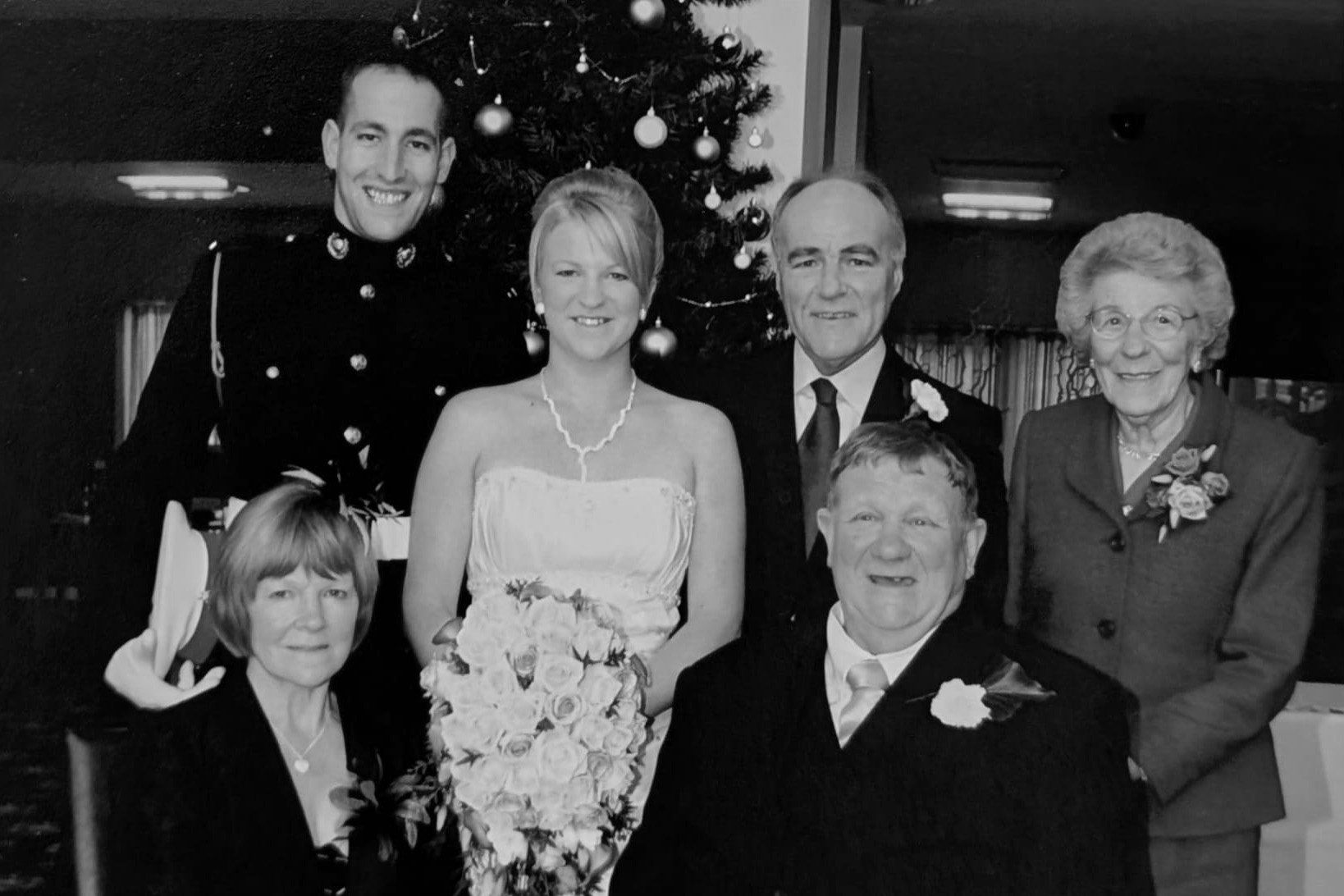
My sister Lucy and brother-in-law Nigel’s wedding featuring Nanny Wade, Uncle Dave, Nanny and Grandad
Looking Beyond Parents and Children
For a long time, the history of childhood was largely concerned with changing attitudes towards children, parental relationships, education and welfare.
These remain important subjects. Historians such as Linda Pollock, in Forgotten Children (1983), and Hugh Cunningham, in Children and Childhood in Western Society Since 1500 (1995; 3rd edn, 2020), have demonstrated why we must be careful about assuming that childhood in the past was necessarily less loving or emotionally meaningful than it is today.
The experiences of children were shaped by their social circumstances, the expectations of their communities and the opportunities available to them. There was no single Victorian or Edwardian childhood, just as there is no universal experience of childhood today.
However, there is another important question worth asking.
What happens when we look beyond the parent-child relationship and begin exploring the wider network of people who contributed to a child's upbringing?
This is where intergenerational history becomes particularly interesting.
Rather than examining generations in isolation, it encourages us to consider the relationships between them: how they supported one another, shared resources, exchanged knowledge and influenced everyday life.
And grandparents provide a wonderful place to begin.
The Grandparents Hidden in Family History
Grandparents are familiar figures in our family trees, but surprisingly little historical attention has been given to their relationships with grandchildren.
Historian Bernard Capp addresses this directly in his 2023 article, The Missing Generation: Grandparents and Agency in Early Modern England.
Capp demonstrates that grandparents could play significant practical and emotional roles in family life. Some provided temporary accommodation for grandchildren, others took responsibility for orphaned children, while many offered advice, guidance and support.
Importantly, grandparents were not simply passive figures watching younger generations grow up. They could be active participants in family decisions, sometimes even challenging the authority of parents.
Although Capp's research concerns an earlier period, it raises fascinating questions about the relationships that continued to shape families in Victorian and Edwardian Britain.
Consider a grandparent living with several grandchildren. What did their daily interactions look like? Did the children seek them out for comfort? Were they responsible for supervision while parents worked? Did they share stories about a world the children had never known?
We cannot always answer these questions, but they are worth asking.
For some children, grandparents may have been occasional visitors. For others, they were part of everyday life. And in some circumstances, grandparents became the adults primarily responsible for their upbringing.
These were very different experiences, each deserving attention.
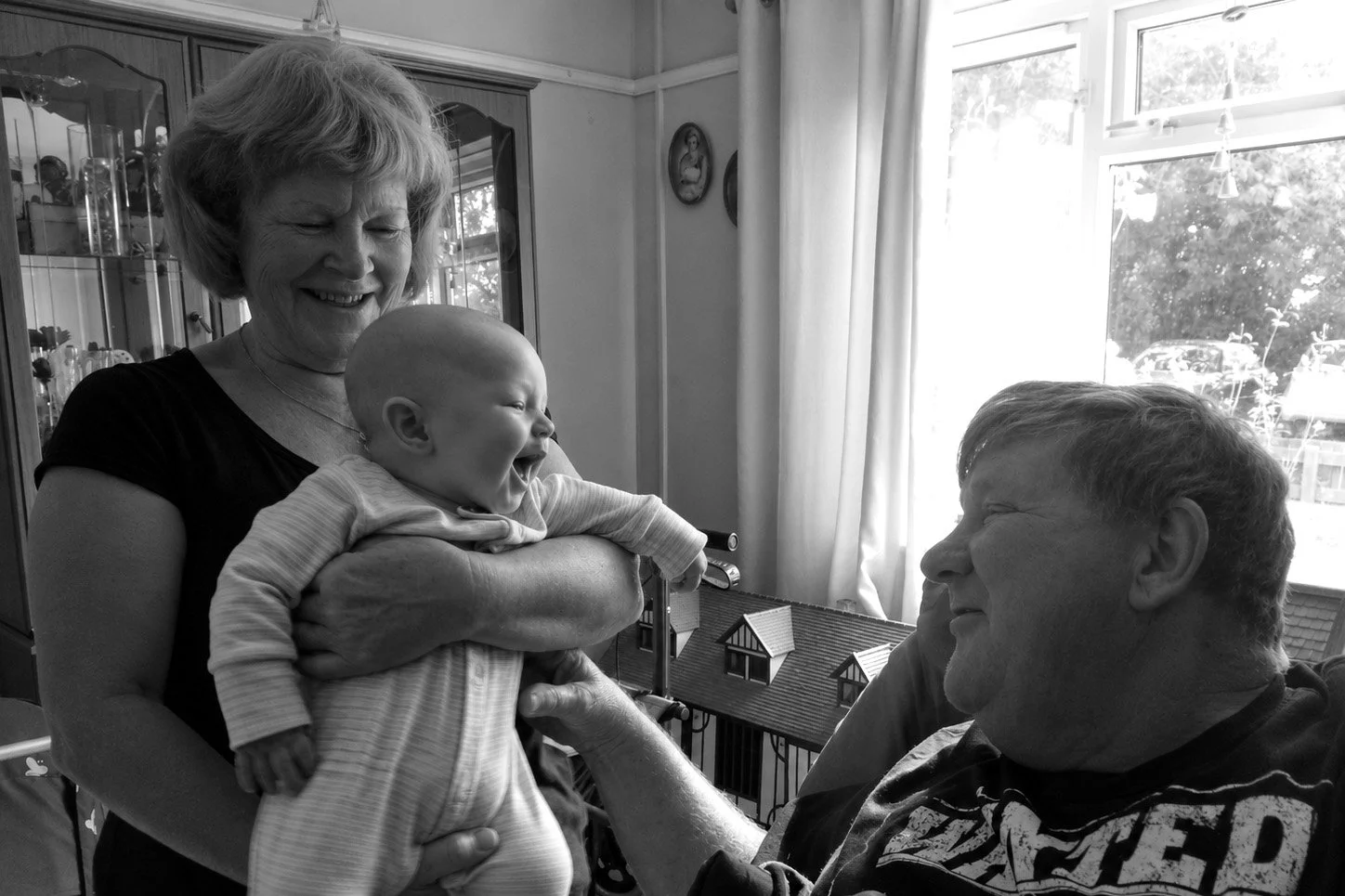
Sometimes Grandad’s jokes were just too funny!
Families Were Not Always So Straightforward
The familiar image of a Victorian family often centres on two parents and their children gathered around the hearth.
Of course, such households existed. But historical family life was rarely quite so simple.
Michael Anderson's Family Structure in Nineteenth Century Lancashire (1971) demonstrates the importance of wider kinship networks within working-class communities. Families could maintain meaningful connections beyond the immediate household, even amid the pressures of industrial employment, migration and economic uncertainty.
Similarly, Leonore Davidoff's Thicker than Water: Siblings and Their Relations, 1780–1920 (2012) reminds us that family relationships extended far beyond parents and children.
Her exploration of siblings, aunts, uncles and cousins reveals the importance of relationships that traditional family histories can easily overlook.
Families were connected through networks of obligation, affection, practical assistance and sometimes conflict.
For children, these wider relationships could influence where they lived, who cared for them and the opportunities available to them.
A child might spend time with grandparents while a parent worked elsewhere, live with relatives following a bereavement, or move between households as family circumstances changed.
Such arrangements were not necessarily permanent, nor did they always indicate abandonment.
Sometimes they reflected the ways families adapted to difficult circumstances using the relationships and resources available to them.
Understanding these arrangements requires us to look beyond household structures and consider the people involved.
Care Was Not Always One-Directional
One of the most interesting aspects of intergenerational history is that care did not necessarily flow in one direction.
We often imagine grandparents providing care for young children, but the relationship could be far more reciprocal.
In Old Age in English History (2000), Pat Thane explores the complicated relationships between older people and their families, challenging simple assumptions about dependency and support.
Older relatives might provide childcare, domestic assistance or financial contributions. Meanwhile, younger family members could help with household duties, provide earnings or offer support as grandparents became less able to work.
These relationships were influenced by age, health, class, gender and economic circumstances.
Children, too, were not simply passive recipients of adult care.
Jane Humphries, in Childhood and Child Labour in the British Industrial Revolution (2010), draws upon working-class autobiographies to demonstrate how children contributed to family survival, particularly when households experienced financial hardship or the loss of a breadwinner.
Although her study focuses primarily on labour and household economies, it reminds us that children could be active participants in family life.
This does not mean we should romanticise childhood labour or overlook the difficulties children faced.
Rather, it encourages us to recognise that children had responsibilities, relationships and experiences of their own.
A grandchild helping an elderly relative with household tasks, for example, might have been participating in a relationship involving both affection and necessity.
Family care was not always simple, but neither was it necessarily confined to a single generation.
The Things That Passed Between Generations
Not everything exchanged between generations was material.
Some of the most meaningful contributions grandparents made to childhood may have involved knowledge, stories, traditions and shared experiences.
Imagine a child accompanying a grandfather through the countryside, learning the names of plants, the history of a nearby building or the stories associated with a particular place.
Or a grandmother teaching a grandchild a recipe, a traditional skill or a familiar expression.
These everyday interactions could connect children with the experiences of earlier generations.
Of course, we must be careful not to assume that such relationships were always affectionate or harmonious. Family tensions, disagreements and unequal expectations were as much a part of historical life as they are today.
Nevertheless, the possibility of these exchanges deserves consideration.
Berry Mayall, in Towards a Sociology for Childhood (2002), encourages us to understand children as active participants in social relationships rather than simply individuals being prepared for adulthood.
This is a particularly valuable perspective when exploring intergenerational history.
Children did not merely inherit knowledge from their elders. They responded to it, interpreted it and developed their own understanding of the world.
An older relative might have shaped a child's interests, beliefs or sense of belonging, while the child's presence could bring companionship, purpose or new responsibilities into the older person's life.
These exchanges are often difficult to trace in historical records, but their potential importance should not be forgotten.
What Can Historical Records Really Tell Us?
For genealogists, the census provides a wonderful starting point for exploring intergenerational households.
A single entry might reveal three generations living under one roof, or a grandchild residing with grandparents while their parents appear elsewhere.
Yet there is an important distinction between identifying a relationship and understanding it.
A census can tell us that a child was recorded as someone's granddaughter. It cannot, by itself, establish who provided daily care, why the child was living there or what that relationship meant to either person.
This distinction is central to my own research into childhood and grandparental care in nineteenth- and early twentieth-century Devon.
By following children and their relatives across different records, we can begin to piece together the circumstances that brought generations together.
Birth and marriage certificates, parish registers, school records, newspapers, Poor Law documents and personal correspondence can all contribute additional information.
Sometimes these sources reveal experiences of hardship, separation or loss. At other times, they provide glimpses of family cooperation, companionship and continuity.
There will always be questions we cannot answer.
But recognising the limitations of our evidence does not make these relationships any less worthy of investigation.
It simply reminds us to approach them with care.
Rethinking the Family Tree
Perhaps one of the greatest pleasures of family history is discovering connections between people whose lives initially appear as little more than names on a page.
We identify parents, grandparents and great-grandparents, tracing families backwards through time.
But a family tree is more than a collection of biological relationships.
It represents people whose lives overlapped, sometimes for decades, and whose experiences were shaped by their connections with one another.
Studying childhood through an intergenerational perspective encourages us to think about these relationships differently.
Rather than asking only where a child lived or who their parents were, we might begin asking who else was present, who offered support and how relationships changed over time.
And perhaps most importantly, we can begin to consider childhood as something experienced within a wider family and community, rather than in isolation.
I find something particularly moving about this approach.
It allows us to celebrate the ordinary relationships that rarely make their way into history books: the shared work, conversations, familiar routines and small acts of kindness that might otherwise disappear from the historical record.
We may never know exactly what a grandparent and grandchild said to one another over the kitchen table, or what stories were exchanged during an afternoon's walk.
But we can recognise that these relationships existed, that they mattered, and that they deserve a place in our understanding of the past.
After all, family history is not simply about discovering who came before us. It is also about understanding the lives they shared.
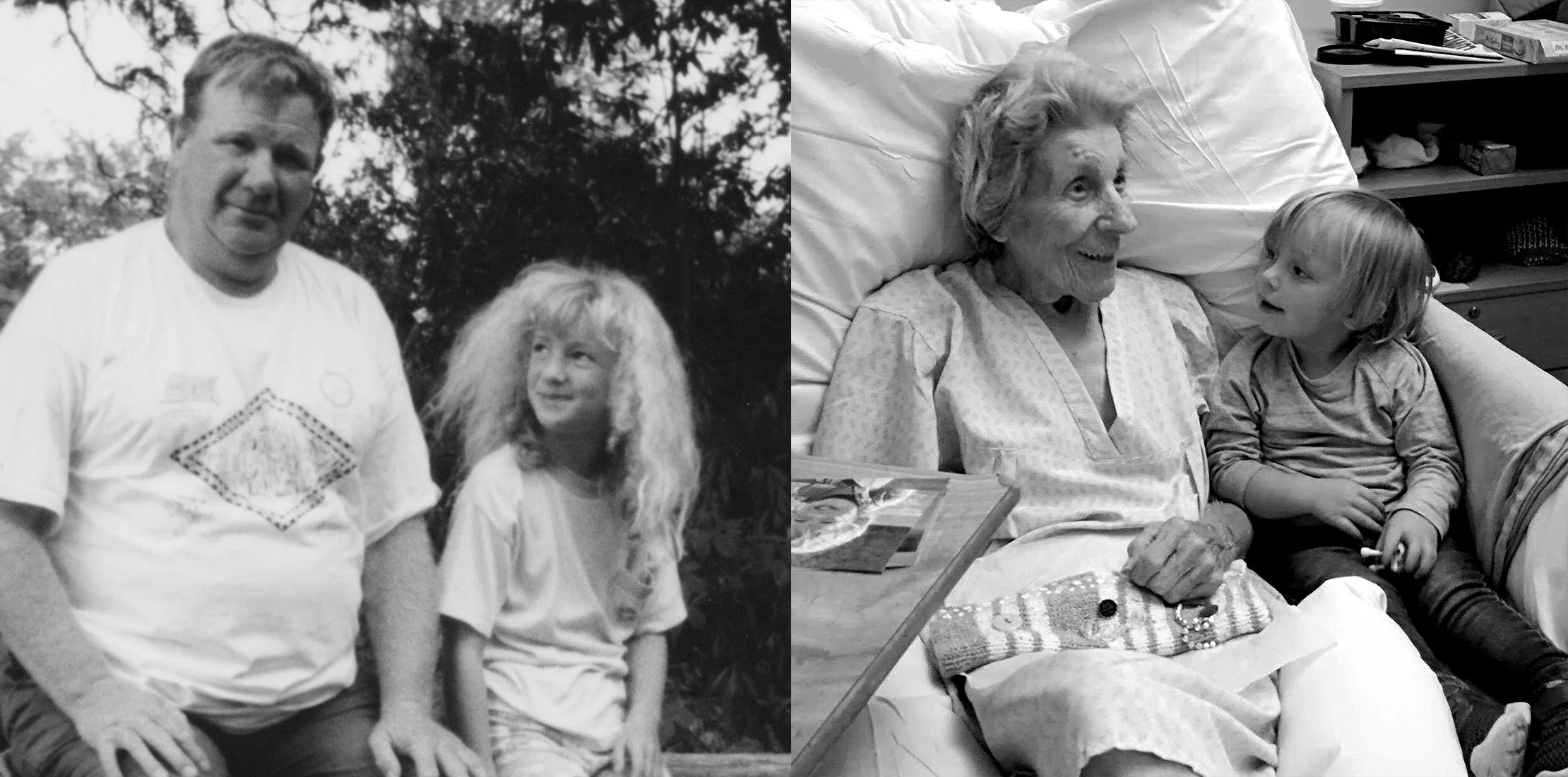
Me and my Grandad (left). My son and his Great-Grandmother (right). The same look of adoration.
References and Further Reading
Anderson, Michael (1971). Family Structure in Nineteenth Century Lancashire. Cambridge: Cambridge University Press.
Capp, Bernard (2023). ‘The Missing Generation: Grandparents and Agency in Early Modern England’, History, 108(379–380), pp. 41–63.
Cunningham, Hugh (2020). Children and Childhood in Western Society Since 1500. 3rd edn. Abingdon: Routledge.
Davidoff, Leonore (2012). Thicker than Water: Siblings and Their Relations, 1780–1920. Oxford: Oxford University Press.
Humphries, Jane (2010). Childhood and Child Labour in the British Industrial Revolution. Cambridge: Cambridge University Press.
Mayall, Berry (2002). Towards a Sociology for Childhood: Thinking from Children's Lives. Buckingham: Open University Press.
Pollock, Linda A. (1983). Forgotten Children: Parent-Child Relations from 1500 to 1900. Cambridge: Cambridge University Press.
Thane, Pat (2000). Old Age in English History: Past Experiences, Present Issues. Oxford: Oxford University Press.
